Library, Organization

How to Choose Library Spine Labels and Label Protectors (A Mini Masterclass)

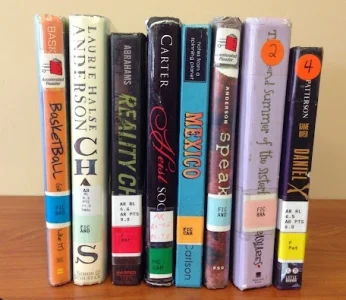
If you have ever looked at a shelf and thought, “Why do these spines look messy already?”, you are not alone. In school and public libraries, spine labels work hard. They get handled daily, wiped down, bumped on carts, and exposed to sunlight.
 
This mini masterclass will help you choose library spine labels and classification label protectors that stay readable and consistent, without overcomplicating your system.

The 3 most common label problems - and what causes them

  • Labels peel or curl at the edges
    • Usually caused by friction, frequent handling, or protectors that do not fully cover the label
 
  •  
Peeling Label
unnamed2 ezgif.com crop
  • Spines look inconsistent across sections
    • Often caused by mixing label sizes, colours, or placement rules over time
  • Barcodes are hard to spot quickly
    • Happens when barcodes blend into the spine and staff are scanning at speed

Step 1:

Decide what you are labelling (genre vs barcode)

For most school and public libraries, the fastest win is to standardize two things:
 

When these two are consistent, shelves look cleaner and daily tasks get easier.

Genre labels: quick visual wayfinding for readers

Barcode labels: fast circulation workflows for staff

Step 2:

Use the right pairing (what we recommend)
 
Here is a simple, neutral system that works well in real libraries:
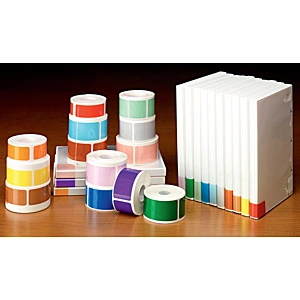
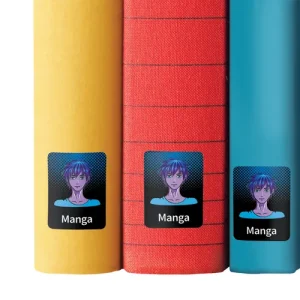
  • Genre labels: pair them with a clear label protector
    • Keeps the genre label readable
    • Helps prevent peeling and scuffing
    • Maintains a clean, professional look
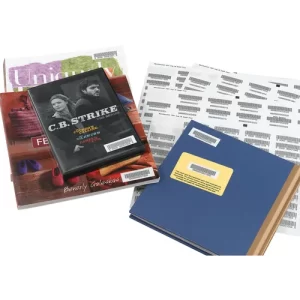
    • Makes barcodes easier to spot at a glance
    • Helps staff scan faster during busy periods
    • Supports quick sorting and categorizing without changing your classification approach

A quick note on coordinating your look

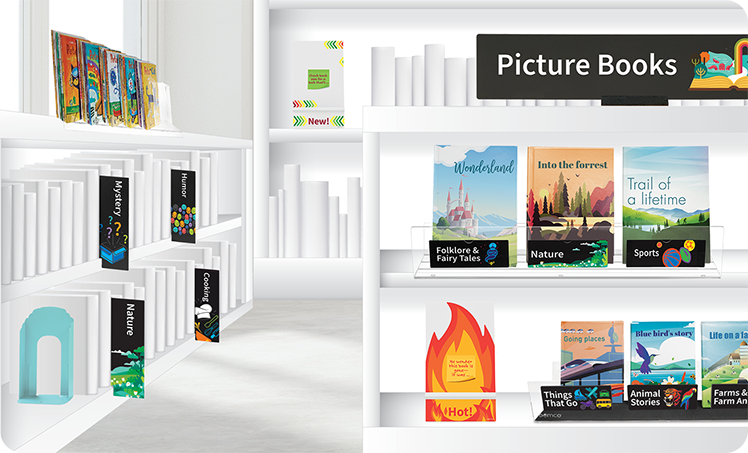
If you want your shelves to look extra cohesive, Flare labels are a great option because they also match our 
ShelfSpark bookshelf display signs.
 
If you already have a colour system in mind, you can match protector colours to your workflow. 
If you do not, keeping it simple still works.

Step 3

Choose sizes that stay consistent.

The biggest “hidden” cause of messy spines is mixing sizes.
 
A practical rule:
 
  • Pick one size for your genre label and stick to it.
  • Pick one size for your barcode label and stick to it.
  • Match each label to a protector that fully covers it.
If you are unsure which size you currently use, check a few books from different sections and measure the label area before ordering.

Step 4

Ordering math that makes procurement easier

A helpful detail for purchase planning:
 
  • Many library labels and protectors are packaged in rolls of 500.
  • In many cases, the label protector box quantity matches the label roll quantity (500).
That makes it easier to build a clean purchase request, because you can order labels and protectors in matching counts.

Quick ordering checklist

  • What are you labelling?
    • Genre labels
    • Barcode labels
  • Which protector finish do you want?
    • Clear (matte or glossy)
    • Colour-tinted (barcode) 
  • How many items need labels?
    • New processing volume
    • Re-labelling volume
  •  Do you need a consistent system across multiple branches or schools?

Step 5

Placement tips (simple rules that prevent chaos)

You do not need a complicated standard, but you do need a consistent one.

  • Place genre labels in the same spot on every spine
  • Place barcode labels in the same spot on every spine
  • Apply protectors smoothly to avoid bubbles and edge lift
Consistency is what makes shelves look tidy and makes training easier for staff and volunteers.

Lead times – plan ahead

Most library supply items are ordered on demand. If an item is not currently in stock, plan for a minimum of 2 to 4 weeks for delivery.
 
If you are ordering for a summer refresh, back-to-school processing, or a large re-labelling project, it is worth ordering early.

Shop labels and protectors

Need More Information? 

If you tell us what you are labelling (genre, barcode, or both) and roughly how many items you are processing, we can help you choose the best fit.