We can help with your design needs. Complete this form to get started! for more information!

Classroom Organization Tips for Teachers That Actually Last

Last Updated: November 22, 2026
Quick Summary
Effective classroom organization starts with the room’s layout, not the bins: map traffic paths and measure storage space before buying containers. Then sort supplies into shared, group, and personal tiers, give every sheet of paper a defined route, and keep systems running with a five-minute daily reset.
- Walk the room as a student and keep high-traffic paths clear of furniture.
- Split supplies into three tiers: shared, group, and personal, each labelled the same way.
- A three-slot tray stack maps to hand out, to grade, and to return.
- Assign each student a number and a durable folder to reuse year to year.
- Schedule a five-minute daily reset, a weekly Friday reset, and a termly audit.
Ready to organize your classroom?Canadian Learning Supply Inc carries classroom furniture, storage, and library supplies to help you set up systems that last.
Table of Contents
- Start With a Classroom Layout That Supports Organization
- Classroom Supply Organization: Sort, Store, and Label So Students Can Self-Serve
- Paper Management: Systems for Handouts, Student Work, and Important Documents
- Classroom Library Organization That Keeps Books Findable and Protected
- Teacher Organization Systems for Your Desk, Planbook, and Grading Pile
- Student Classroom Jobs for Organization That Build Real Routines
- Maintenance Routines, Reset Schedules, and Low-Cost Fixes for Small Rooms
- Plan Your Organization Order Around Real Timelines
- Frequently Asked Questions
Start With a Classroom Layout That Supports Organization
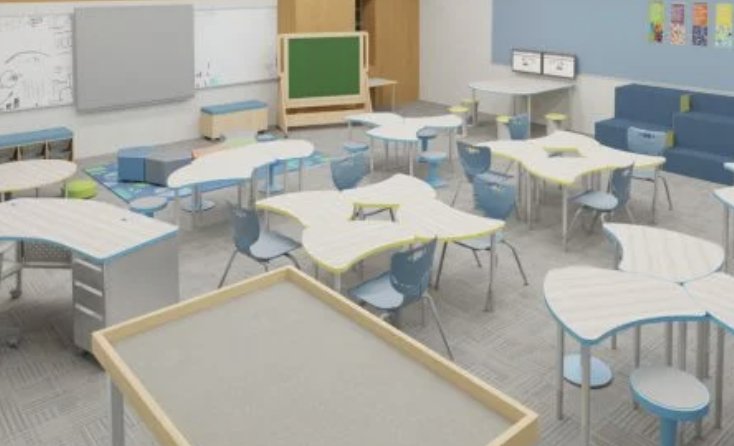
Classroom organization works best when it starts with the room itself, not the bins, so effective classroom organization begins with the layout. Before you buy a single container, decide where bodies move and where things live.
Map Traffic Paths Before You Move a Single Shelf
Walk your room as a student would. Note the door, the pencil sharpener, the garbage, the coat hooks.
- Keep high-traffic paths clear of furniture
- Put shared supplies near where they get used
- Place quiet zones away from the door
Choose Storage That Fits Your Room, Not the Other Way Around
Measure your wall space and shelf depth before ordering. A tall unit that blocks a window helps no one.
Pick low shelving for student access. Use taller units for teacher-only items. Check that drawers clear the desk edge. Measure twice, order once.
How to Organize a Small School Library for Student Browsing
Classroom Supply Organization: Sort, Store, and Label So Students Can Self-Serve
Classroom supply organization is the practice of grouping materials so students can find, use, and return them without asking. Strong systems cut interruptions and keep lessons moving.
The Three-Tier Supply System: Shared, Group, and Personal
We recommend splitting supplies into three clear tiers.
- Shared: markers, glue, scissors kept in a central spot
- Group: table caddies for team materials
- Personal: each student’s own pencil box or pouch
Label every tier the same way. Use pictures for younger learners. Blank spine labels let you mark bins and shelves so students match words to spots.
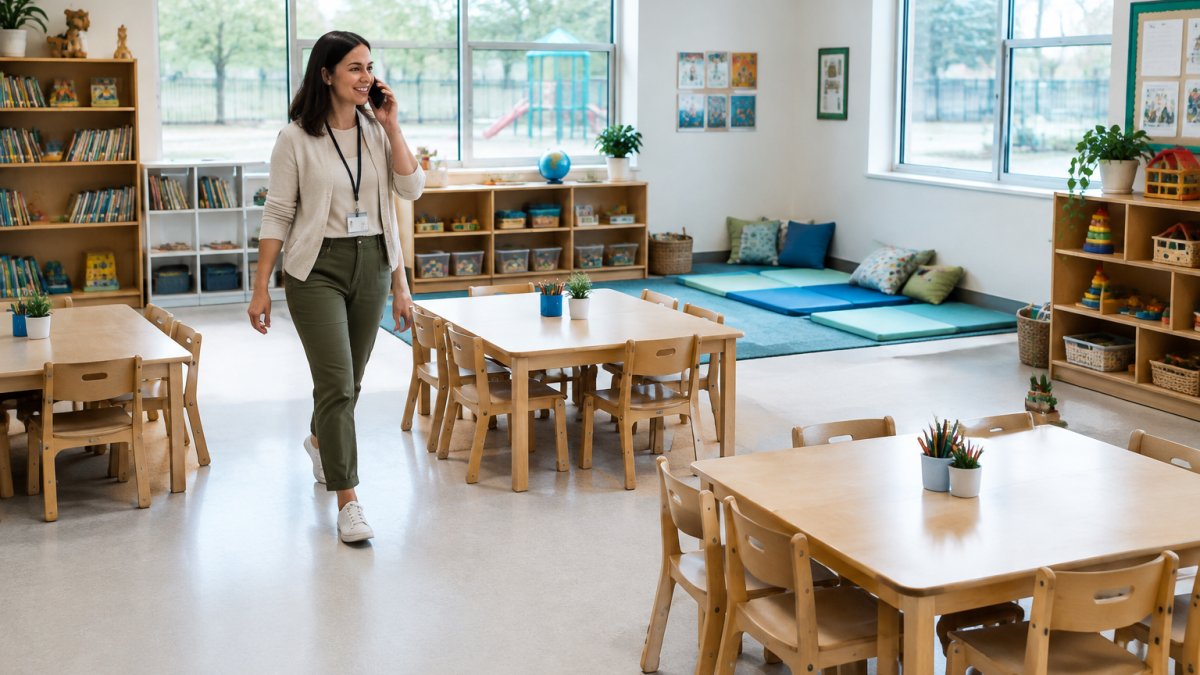
How to Organize a Classroom for Students
Paper Management: Systems for Handouts, Student Work, and Important Documents
Paper piles up fast. A simple paper management system keeps handouts, student work, and important documents from taking over your desk. The goal is not to eliminate paper but to give every sheet a defined path from the moment it enters the room to the moment it leaves or gets filed.
Map the Paper Lifecycle First
Before you buy a single tray, trace how paper actually moves through your room. Most classroom paper follows one of four routes:
- Inbound handouts, photocopies, notices, and worksheets you distribute
- Outbound student work, completed assignments waiting to be collected and graded
- Returned work, graded items going back to students
Each route needs its own landing spot. When two routes share one tray, papers get lost. Label each station by route, not by furniture.
Build a Tray Stack That Matches the Routes
A three-slot tray stack works when each slot maps to a route rather than a vague category:
- To hand out, this week’s photocopies, sorted by day or period
- To grade, collected work, with a sticky note flagging the class and assignment
- To return, graded work waiting for the next class
Keep a fourth slot or a shallow bin for reference documents that need action within the week. Anything that needs to be kept longer moves to a binder, not a tray.
Watch out: a tray labelled “misc” or “to file” becomes a permanent parking lot. If a paper has no route, it has no home, decide where it goes or recycle it the same day.
Use a Numbered Folder System for Student Work
For student work, assign each student a number and a durable folder. Numbering rather than naming lets you reuse folders year to year and lets a paper monitor file work without reading names.
For work that needs to travel home, pair the numbered folder with a take-home pouch. A common pattern is one folder for work in progress and one pouch for items going home and coming back signed.
Keep Important Documents in One Tabbed Binder
For important documents, keep one binder with tabbed sections, one tab per category such as assessment records, communication logs, and admin forms. Add label protectors so the spine label survives a full year of handling.
A second, smaller binder for items you carry to meetings keeps the master binder from travelling and getting lost. The rule is simple: the master binder stays in the room; a working folder travels.
Connect Paper to Digital Where It Saves Time
Physical systems work best when they hand off cleanly to digital ones. Scan or photograph completed assessment records and permission forms into a dated folder on your device, then recycle the paper copy. Keep a single running digital list of what you have filed so you can confirm a document exists without digging through the binder.
Teach the System to Students
A paper system only holds if students use it. Teach the collection routine once, model it, and assign a paper monitor to collect and file work at the end of each period. Post the route, hand out, collect, grade, return, where students can see it. When a paper goes missing, the first question is which route it left, not who lost it.
Classroom Library Organization That Keeps Books Findable and Protected
Classroom library organization means arranging books so students find titles fast and covers stay intact. A findable library gets read more.
Sort by genre, reading level, or author, then pick one and stay consistent. Use book supports to keep titles upright and easy to scan.
Watch out: mixing three sorting systems at once confuses students. Pick one and teach it clearly.
Teacher Organization Systems for Your Desk, Planbook, and Grading Pile
Teacher organization systems keep your own workspace calm so you can focus on students. Start with the desk, then the planbook, then grading.
Clear your desk each afternoon. Anchor your week in a desk calendar and a single planbook. A sturdy single pedestal teacher desk gives you drawers that hold their shape.
Student Classroom Jobs for Organization That Build Real Routines
Student classroom jobs for organization turn tidy-up into a routine students own. Assign roles, rotate them, and teach each one once.
- Supply captain: checks bins at day’s end
- Library helper: reshelves returned books
- Paper monitor: collects and files work
Post the jobs where everyone sees them. Rotate weekly so every student learns every role.
Maintenance Routines, Reset Schedules, and Low-Cost Fixes for Small Rooms
Systems fail without upkeep. A five-minute daily reset beats a big monthly clean every time, but the reset only works if it is scheduled, taught, and checked. Most organization advice stops at setup; the routines below are what keep a room functional in week ten, not just week one.
Build a Three-Layer Reset Schedule
Treat maintenance as three nested routines rather than one big clean:
- Daily (five minutes, end of day): students return shared supplies to their labeled spots, the paper monitor empties the collect tray, and you clear your desk to only what tomorrow needs.
- Weekly (Friday, fifteen to twenty minutes): reset bins and trays, return stray books to the library, replace worn labels, and clear one surface completely.
- Termly (end of each term): audit every storage zone, purge outdated handouts and broken materials, reprint labels, and reassess whether each system still matches how the room is actually used.
Post the daily and weekly routines where students see them. A routine that lives only in your head becomes your job forever.
Assign the Reset, Don’t Just Do It
Maintenance sticks when students own parts of it. Pair each reset task with a classroom job, supply captain checks bins, library helper reshelves returns, paper monitor clears trays, desk inspector flags messy spots.
Watch out: if the daily reset takes longer than five minutes, the system is overloaded. Cut a step or move a task to the weekly reset rather than letting the daily routine stretch and get skipped.
Measure Whether a System Actually Works
You cannot improve a system you do not measure. Pick two or three simple indicators and check them for a week:
- Time to locate materials, how long it takes you or a student to find a named item
- Transition time, how long it takes the class to move between activities that require supply handouts
- Frequency of misplaced items, how often something goes missing or turns up in the wrong bin
If locating materials takes more than a minute or transitions regularly run long, the storage or labeling needs rework, not more bins. A common pattern is that one overloaded zone causes most of the delay; fixing that zone usually fixes the metric.
Low-Cost Fixes for Small Rooms and Shared Spaces
Small rooms and shared spaces need vertical thinking and multi-use furniture rather than more floor space:
- Use wall space above student reach for teacher-only storage and below waist height for student-accessible bins.
- Choose furniture with built-in storage, a shelf under a table, drawers in a desk, so storage does not consume separate floor area.
- Repurpose shoeboxes, jars, and sturdy food containers as bins before buying new ones. Many teachers find no-buy solutions last longer because they fit the space rather than forcing the space to fit them.
Reset Before Breaks, Not After
Schedule a deeper reset before long breaks rather than after. Coming back to a room that is already organized removes the first-day scramble and lets you start instruction on day one. The termly audit is the natural moment to reprint labels, replace worn label protectors, and decide which systems to keep, change, or drop.
Treat upkeep as three nested routines rather than one big clean.
|
Layer |
Time |
What happens |
|---|---|---|
|
Daily |
Five minutes, end of day |
Students return shared supplies; paper monitor empties collect tray; desk cleared |
|
Weekly |
Friday, fifteen to twenty minutes |
Reset bins and trays, return stray books, replace worn labels |
|
Termly |
End of each term |
Audit storage zones, purge outdated handouts, reprint labels, reassess systems |
Plan Your Organization Order Around Real Timelines
Ordering early matters more than most teachers expect.
Canadian Learning Supply Inc. has no warehouse, so items are ordered only when customers order them, which means they can take a little longer to arrive.
Build your list in order: layout first, then storage, then labels, then library supplies.
Getting a classroom organized takes planning, patience, and the right supplies in the right order.
Frequently Asked Questions
How do teachers organize a classroom so it stays tidy all year?
Build the system around where things land, not where they look best. Sort classroom supplies into shared, group, and personal tiers, label every container at student eye level, and assign a weekly reset to student classroom jobs for organization. A five-minute Friday reset where tables are cleared, bins checked, and handouts filed prevents the slow buildup that turns a tidy room into a cluttered one by November. The system only holds if students can run it without you.
What are the best ways to organize classroom supplies on a tight budget?
Start with what the room already has. Reuse sturdy boxes, shoebox lids, and existing shelving before buying anything, and move mismatched containers to storage the class rarely opens. When you do buy, choose one container size that stacks and fits your shelves so labels and lids stay interchangeable. Low-cost organization works best when the number of categories is small: five to seven labeled zones beat twenty half-used bins every time.
How should I organize a classroom library so books stay protected?
Group books by genre or reading level rather than alphabetically, face a few covers outward to draw readers, and keep a labeled return bin near the reading area. For protection, reinforce spines and cover frequently handled titles before they circulate, and set one student job for shelf checking each week. A classroom library organization system that students can restock themselves keeps books findable and cuts the number of damaged returns.
How can students help keep the classroom organized?
Give each student a named job with a clear five-minute routine: supply monitor, paper collector, library shelf checker, or table captain. Rotate roles monthly so everyone learns the systems. Students who help design the labels and decide where things belong are far more likely to put them back. Tie jobs to the end of the day so the reset happens before anyone leaves, and keep a short checklist posted where the job holders can see it.
